
Introduction
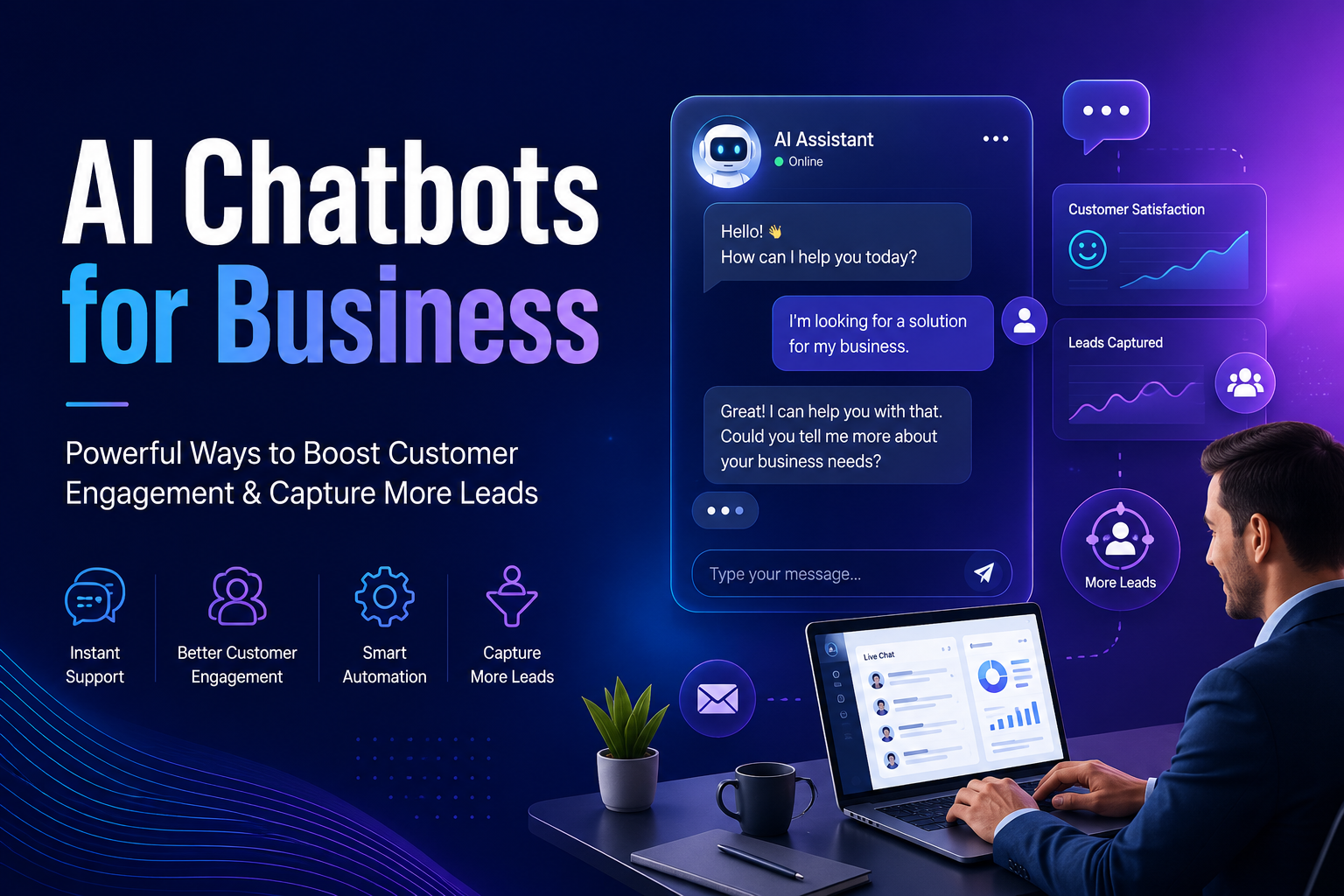
Customers now expect instant answers, regardless of the time of day or how busy your support team is. This shift has made AI Chatbots for Business one of the fastest-growing tools for improving engagement while also capturing leads that would otherwise be lost to slow response times.
This article explores how chatbots work in practice, where they deliver the most value, and how to implement one without losing the human touch customers still expect from your brand, even as automation handles more of the initial conversation.
How Chatbots Are Changing Customer Interactions
Modern conversational tools can handle everything from answering frequently asked questions to qualifying leads before a human ever gets involved. This frees up staff time for more complex conversations that genuinely require a personal touch.
Unlike older rule-based bots, current systems can understand context and intent more naturally, making conversations feel far less robotic than earlier generations of the technology, which improves overall customer satisfaction with automated support.
- Instant responses outside of normal business hours
- Automatic qualification of leads based on budget and intent
- Consistent messaging across every customer interaction
- Reduced wait times during high-traffic periods
Businesses adopting AI Chatbots for Business purposes often report that the biggest early surprise is how many after-hours inquiries were previously going unanswered entirely, representing lost revenue that simply wasn’t visible before.
Best Practices for Implementation
Successful deployment starts with clearly defining what the bot should and shouldn’t handle. Trying to automate every possible scenario often backfires, leading to frustrating loops that push customers away.
A well-designed handoff process, where the bot smoothly transfers complex conversations to a human agent, tends to produce the highest satisfaction scores among businesses that have adopted this technology.
Well-implemented AI Chatbots for Business also benefit from periodic review of conversation transcripts, which often reveal recurring questions that could be addressed more clearly on the website itself, reducing unnecessary chat volume.
Turning Conversations Into Qualified Leads
Beyond answering questions, chatbots can proactively gather contact information and qualify visitors based on predefined criteria. This means your sales team only spends time on leads that actually match your ideal customer profile.
Integrating the bot directly with your CRM ensures no lead falls through the cracks, and follow-up sequences can begin automatically the moment a conversation ends, keeping momentum going without requiring manual data entry from your team.
Choosing the Right Chatbot Platform
Not all platforms offer the same level of customization or integration capability. Businesses should prioritize tools that connect easily with their existing website, email, and CRM systems rather than choosing based on price alone, since integration gaps often create more work later.
When evaluating AI Chatbots for Business use cases, look closely at how the platform handles data privacy and whether it offers clear analytics on conversation outcomes, since these factors significantly affect long-term value.
Testing with a small segment of your traffic before a full rollout helps identify awkward conversation flows early, saving you from a poor first impression across your entire audience.
Ongoing training is just as important as the initial setup. Feeding the system real customer questions and refining its responses over time keeps conversations accurate as your products, services, or policies evolve.
Frequently Asked Questions
- Can chatbots fully replace human customer service?
No, chatbots work best as a first line of support that handles routine questions while escalating complex issues to humans. Most successful implementations use a hybrid approach rather than full automation.
- Are chatbots suitable for small businesses with limited budgets?
Yes, many affordable platforms now offer chatbot functionality specifically designed for small business needs. The return on investment often justifies the cost within the first few months through improved lead capture.
- How do chatbots help with lead generation specifically?
They engage visitors immediately, ask qualifying questions, and collect contact details before a potential customer leaves the site. This captures interest that would otherwise be lost to slow response times.
- What industries benefit most from chatbot implementation?
E-commerce, real estate, and service-based businesses with high inquiry volumes tend to see the strongest results. Any industry with repetitive customer questions can benefit significantly.
- How long does it take to set up a chatbot?
Basic setups can be running within a few days using pre-built templates. More advanced, fully customized bots may take several weeks to properly train and refine.
Conclusion
As customer expectations continue rising, businesses that adopt conversational technology thoughtfully will have a clear advantage over those relying solely on traditional support channels. Implementing AI Chatbots for Business isn’t about replacing human connection, but about ensuring no opportunity slips away simply because no one was available to respond in time. Start with a focused use case, measure the results closely, and expand from there as you learn what resonates most with your audience.